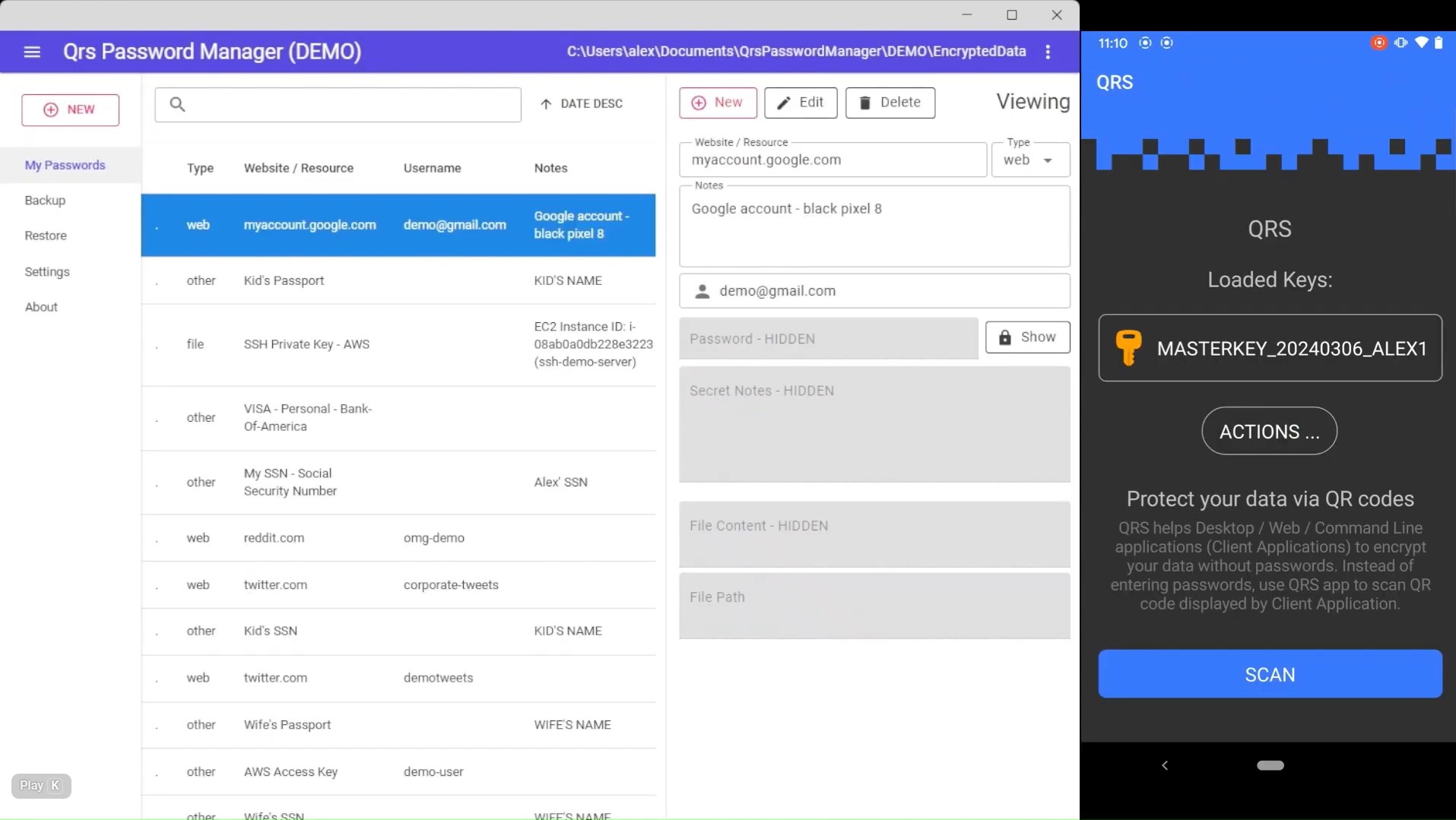
Why use QRS encryption?
Easier than passwords
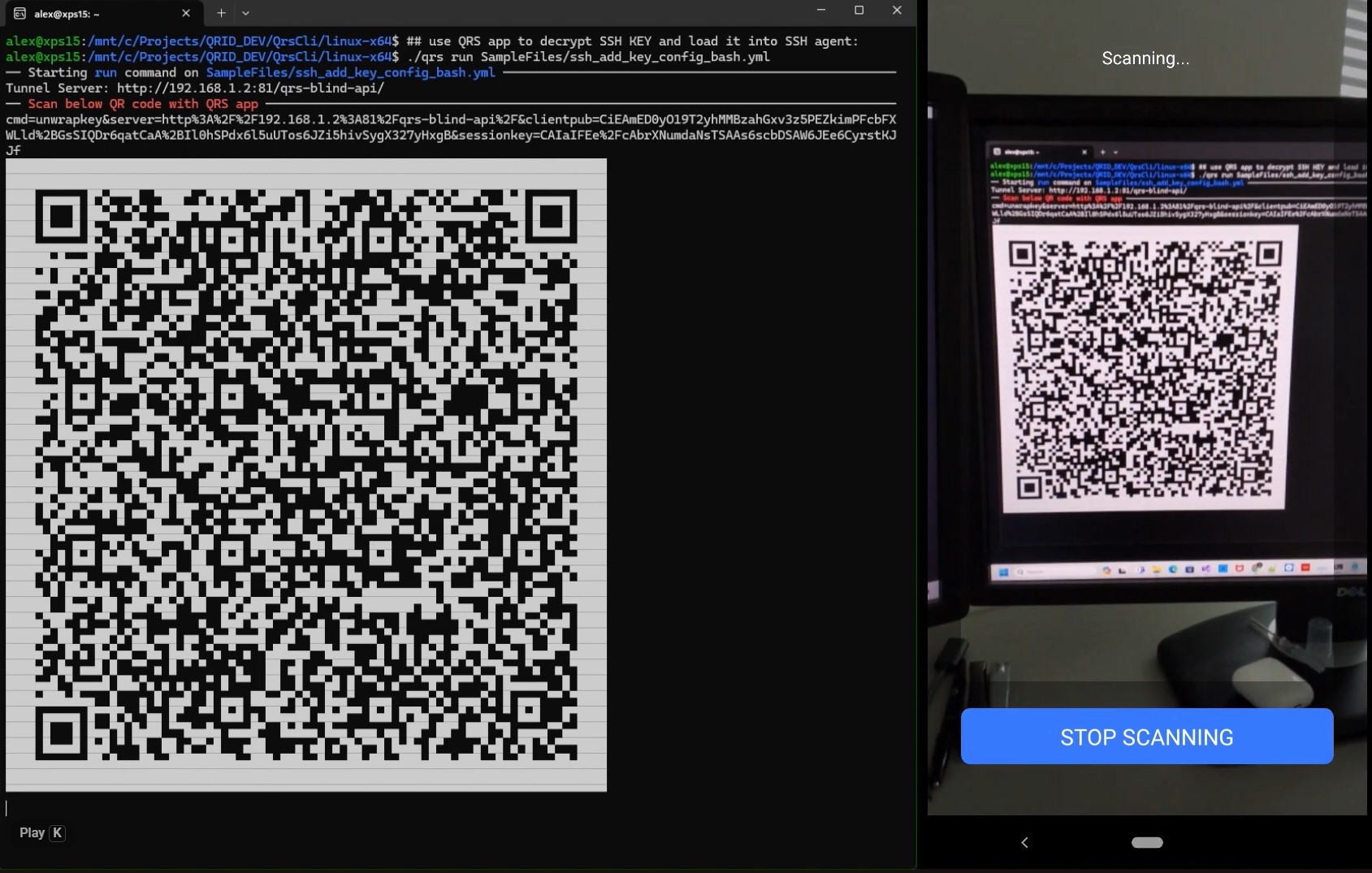
Scanning QR codes is easier compared to entering passwords.
More secure than passwords
QRS uses randomly generated AES 256-bit KEK and DEK keys that cannot be brute-forced. Other encryption software often use keys derived from passwords that would usually have LOWER ENTROPY and can be brute-forced if password is weak. Even the strongest of manually managed passwords would have MUCH LESS entropy compared to random keys used in QRS.
No risk of keyloggers
Keyloggers may steal your passwords while being typed. With QRS, keyloggers are of less concern b/c nothing is typed while unlocking (decrypting) your data.
Stop worrying where and how to store your keys
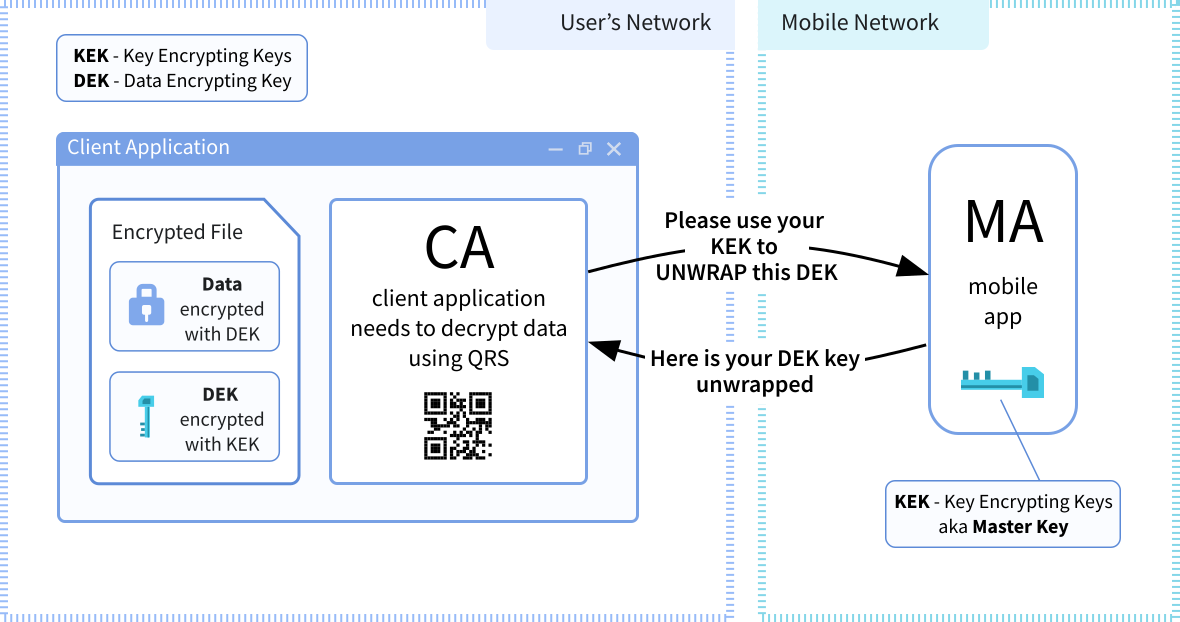
You may need to access your encrypted data from multiple places - from home, office, or that Cloud VM. No need to decide where to store your keys - QRS provides an easy way to store DEK keys together with your data (usually in the same file), authenticated and encrypted with Master Key. Master Key is securely stored in your phone protected by biometrics and Secure Enclave / Secure Element chips. Also, some Master Keys could be stored offline - completely offloaded from your phone - if used infrequently.
Stop worrying about losing your keys
Since QRS stores your DEK keys together with your data, if you have your data you also have your DEK keys. The only thing to worry about is your Master Key which you absolutely must back up into a password-protected Backup Image and have several copies of that image stored in redundant locations.
Quantum Safe AES-256
QRS uses AES encryption with 256 bit keys, which is considered quantum safe.
Quantum Safe Hybrid (ML-KEM + ECC)
QRS uses modern Post-Quantum Cryptography (PQC) - Hybrid (ML-KEM + ECC) asymmetric encryption schema which is considered quantum safe.
Authenticated Encryption with Associated Data (AEAD)
QRS uses AES in GCM mode which provides the ability to cryptographically bind the metadata (Associated Data) describing the encrypted data. For example, Password Manager application might want to use 'website' and 'username' as Associated Data (AD) attributes. QRS uses AEAD extensively, for example, Client Application Name is a mandatory AD attribute. QRS also provides API for Client Applications to define custom AD attributes to be attached to wrapped DEK keys. Before unwrapping the DEK key, QRS application displays AD attributes to user and waits until user confirms the operation.
Flexible API to support future Client Applications
QRS is intended to be flexible to support existing and also not yet developed Client Applications. The goal is to completely avoid changes in QRS mobile app when developing new Client Applications.
Free and Open Source
QRS is Free and Open Source software with a permissive MIT licence.
Cross-Platform
No more platform lock-in! QRS uses modern cross-platform C#/.NET stack and so it runs on IOS, Android, Windows, macOS, and Linux. Switching mobile platforms by Backing up your Master Key on Android and restoring it on IOS, or vice-versa, is super easy!
Multiple Programming Languages
Open QRS protocols are defined as a set of HTTPS APIs with Protobuf payloads. For C#/F#/VB.NET developers we already provide a client library. For languages like JavaScript, TypeScript, Java, Go, Rust, Python, C/C++ - client libraries will need to be developed using Protobuf and standard cryptographic primitives available in any language. Please send us email to info@qrid.com if you are interested in a client library development for your language.
No cloud accounts
Having Apple, Google or Microsoft account is NOT required to use QRS. On Android, we completely disable cloud backup. On IOS, KeyChain is used to securely store your Master Key on device. With that said, the officialy supported way to backup your Master Key(s) is to create a password-encrypted Backup Image via QRS app. This gives you 100% privacy, vendor independence, and ultimate control over your encryption keys. We will also publish QRS source code so you will be able to build QRS apps from source and run it on your platform of choice.
Nothing is stored server-side
There is NO risk of server-side data loss.
Host your own Tunnel Service for free
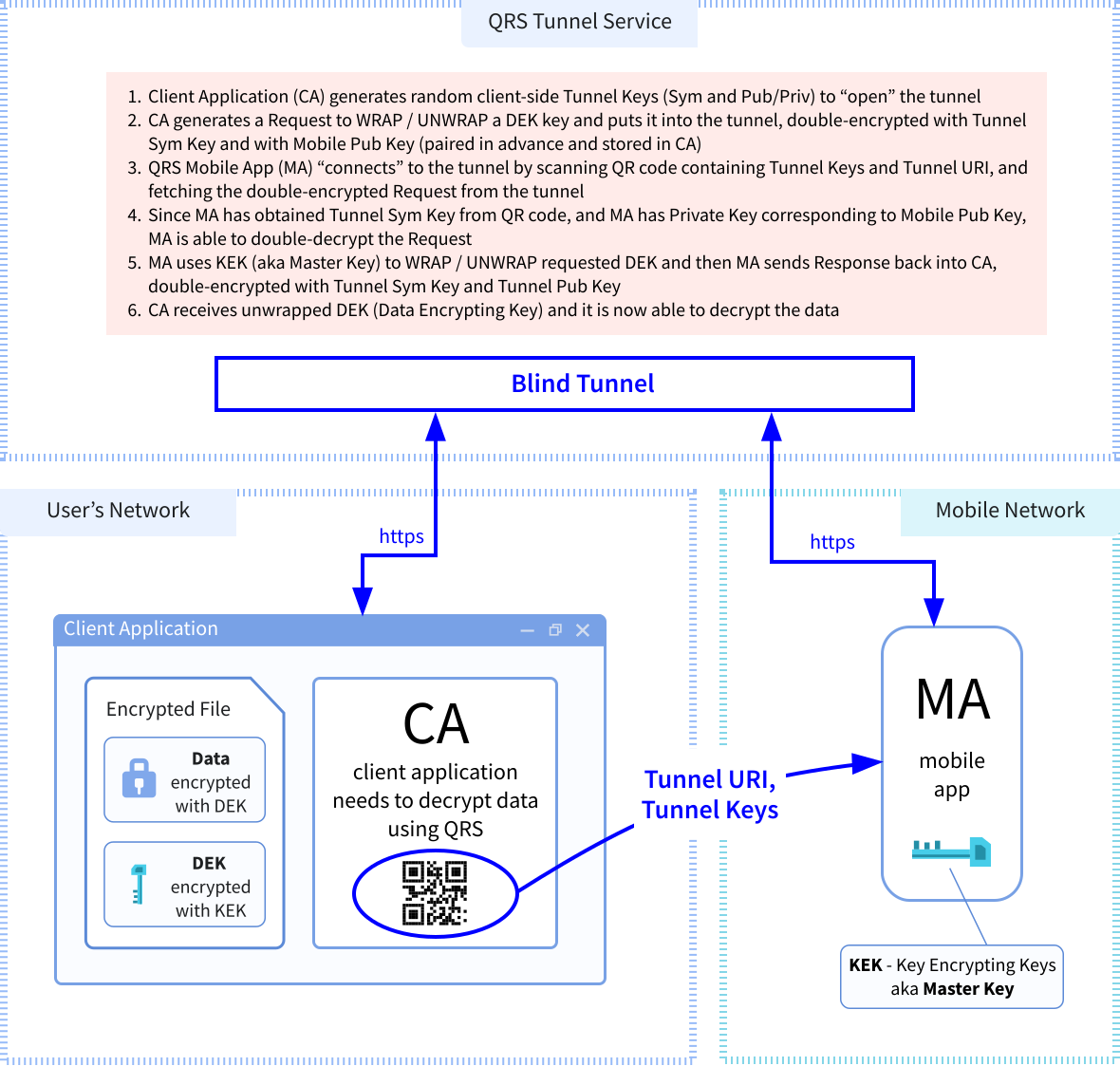
By default, client applications use the Tunnel Service hosted at QRID.COM. You can change TunnelServerUri in Settings.json to point to your own self-hosted tunnel instance. We also provide a lightweight, high-performance Qrs Tunnel Service Docker image. It can be deployed on platforms like Google Cloud Run and kept in the free tier by scaling to 0. In our tests with Cloud Run, cold starts were under 200 ms, which gives a good user experience.